
Description
Product Overview
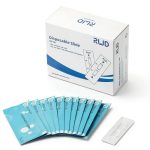
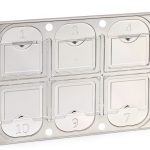
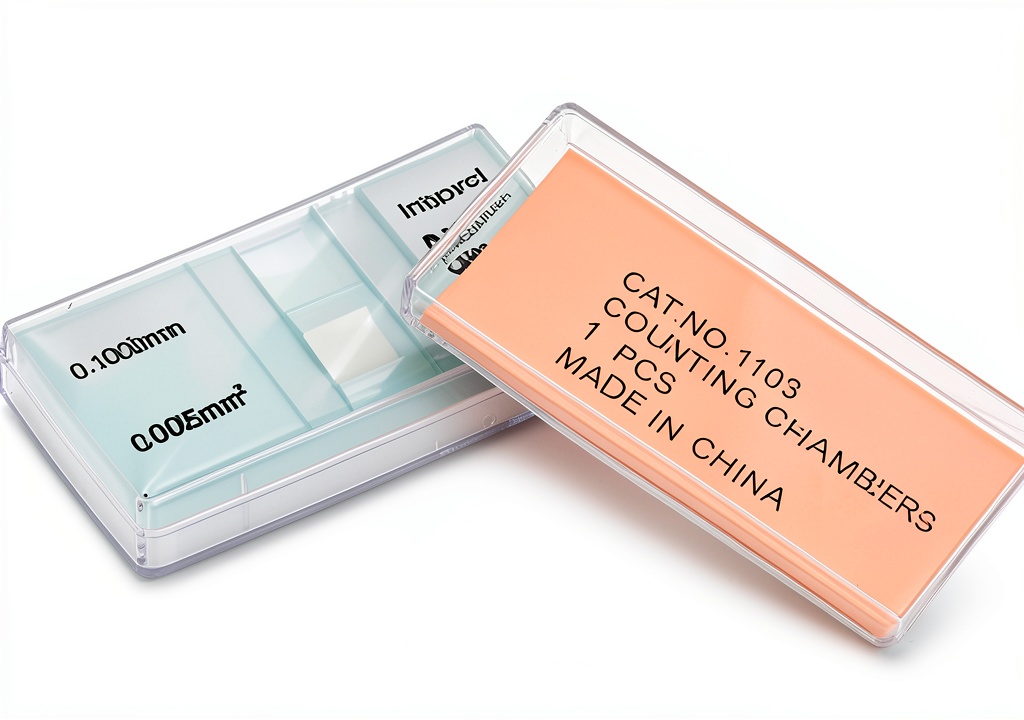
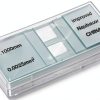
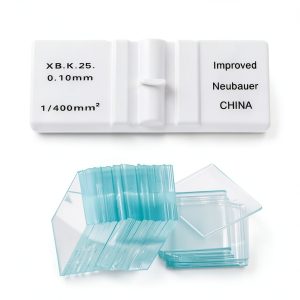
The Improved Neubauer Hemocytometer from Wintopsometer is a precision‑engineered glass counting chamber designed for scientists, technicians, and researchers who demand reliable cell density data across a wide range of sample types. Constructed from high‑quality optical glass, the chamber provides exceptional light transmission, allowing users to see even the smallest microorganisms without the need for additional illumination equipment. The double counting grid, a hallmark of the Neubauer design, features two identical counting areas, each divided into a series of precisely calibrated squares that enable rapid, repeatable measurements. This redundancy reduces user error and improves statistical confidence, especially when working with low‑concentration samples.
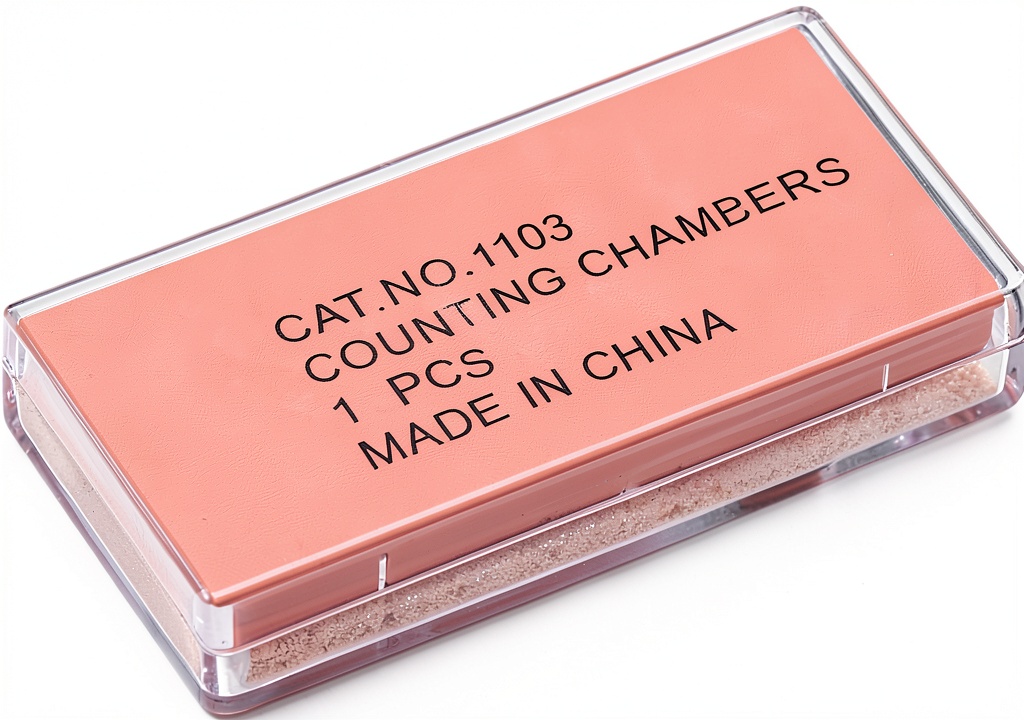
The device measures 3.94 x 2.36 x 0.79 inches and weighs only 0.704 ounces, making it easy to handle, store, and integrate into existing laboratory workflows. Its reusable nature aligns with sustainable lab practices, reducing waste while maintaining consistent performance over many uses. The chamber is compatible with standard microscopes and can be used with a variety of staining techniques, including trypan blue, methylene blue, and fluorescent dyes, expanding its versatility across hematology, microbiology, and cell culture applications. The clear, brightly illuminated grid lines are etched directly into the glass, ensuring they remain visible after repeated cleaning cycles.
Designed with the end‑user in mind, the hemocytometer includes a cover slip that fits snugly into the recessed chamber, creating a uniform depth of 0.1 mm across the counting surface. This precise depth is critical for accurate volume calculations, as each square represents a known fraction of a milliliter. The product’s ASIN (B07X2ZKP7C) and model number (Microscope Counting Chambers) reflect its positioning within the industrial and scientific marketplace, where it ranks #13 in Lab Cellware Chambers and #239,144 overall in the category. Wintopscope’s commitment to quality is evident in the meticulous manufacturing process, which adheres to strict tolerances to guarantee that every chamber meets the exacting standards required for quantitative cell analysis.
![[Product front view showing all components]](https://www.yelvora.store/wp-content/uploads/2026/07/c6ba102693e64ade8a579b32f8f46874.jpg)
Usage
In the modern laboratory, the Improved Neubauer Hemocytometer serves as a versatile tool for a broad spectrum of applications. Hematology labs rely on it to count red and white blood cells, platelets, and other blood components, providing essential data for diagnostic testing, blood banking, and clinical research. Microbiology laboratories use the chamber to enumerate bacteria, yeast, and protozoa in culture media, enabling accurate determination of colony‑forming units per milliliter (CFU/mL) and facilitating antimicrobial susceptibility testing.
Cell culture facilities benefit from the hemocytometer when assessing cell proliferation, viability, and concentration during routine passaging, cryopreservation, and downstream assay preparation. The double counting feature is particularly valuable when working with scarce or precious samples, as it allows the user to verify counts across two independent grids without sacrificing additional material. The chamber’s compatibility with both brightfield and fluorescence microscopy expands its utility to advanced imaging techniques, such as live‑cell tracking and high‑content screening.
Beyond traditional laboratory settings, the device is well suited for educational environments, where students learn fundamental principles of microscopy, sample preparation, and quantitative analysis. Its robust construction withstands the rigors of classroom use, while the clear grid lines aid in teaching accurate counting methods. Field researchers conducting environmental sampling can also employ the hemocytometer to quantify plankton, algae, and other aquatic microorganisms on site, thanks to its portable size and ease of cleaning.
The hemocytometer’s design accommodates a range of staining protocols, allowing users to differentiate live versus dead cells, identify specific cell types, or highlight subcellular structures. Whether integrated into a standard workflow or used as a standalone counting device, the Improved Neubauer Hemocytometer delivers consistent, reproducible results that support high‑quality data generation across diverse scientific disciplines.
Why Choose Us
Choosing the Wintopscope Improved Neubauer Hemocytometer means selecting a product backed by a reputation for precision, durability, and customer‑focused support. Each chamber undergoes rigorous quality control inspections, including optical clarity testing, dimensional verification, and grid accuracy checks, ensuring that every unit meets the exact specifications required for quantitative cell analysis. The glass material is chemically resistant, allowing for thorough cleaning with common laboratory solvents without degrading the surface or compromising the etched grid lines.
Wintopscope’s commitment to sustainability is reflected in the chamber’s reusable design, which reduces plastic waste and lowers long‑term operating costs for laboratories. The company provides detailed usage guidelines, cleaning protocols, and troubleshooting resources to help users maximize the lifespan of their equipment. In addition, a responsive technical support team is available to address any questions related to performance, compatibility, or maintenance, reinforcing the brand’s dedication to user success.
Performance‑oriented features such as the double counting grid, high light transmission, and precisely calibrated depth contribute to superior accuracy and repeatability, essential for research that demands statistical rigor. The hemocytometer’s compatibility with a wide array of microscopes, staining methods, and analytical techniques makes it a flexible addition to any lab’s toolkit, eliminating the need for multiple specialized counting devices.
By investing in this hemocytometer, laboratories benefit from a cost‑effective, high‑quality solution that aligns with both scientific and environmental goals. Wintopscope’s track record of delivering reliable scientific instruments, combined with its focus on continuous improvement, ensures that users receive a product that not only meets but exceeds the expectations of modern research environments.
Key Features
- Double counting grid provides two identical measurement areas, reducing error and increasing statistical confidence.
- High‑quality optical glass ensures excellent light transmission for clear visibility of even the smallest cells.
- Reusable design promotes sustainable laboratory practices and lowers long‑term costs.
- Precise 0.1 mm chamber depth enables accurate volume calculations for reliable cell concentration results.
- Dedicated customer support and detailed usage guides ensure optimal performance and easy maintenance.
FAQ
How do I clean and reuse the hemocytometer?
After each use, gently rinse the chamber with distilled water to remove residual sample. For stubborn stains, soak the chamber in a mild detergent solution, then rinse thoroughly with distilled water and allow it to air dry. Avoid abrasive cleaning tools that could scratch the glass or alter the grid lines.
Can this hemocytometer be used with fluorescent microscopy?
Yes, the optical glass is compatible with both brightfield and fluorescence microscopy. The clear, thin glass minimizes background fluorescence, allowing you to visualize stained cells or subcellular structures when using appropriate filter sets.
What is the advantage of the double counting chamber?
The double counting design includes two identical grids, enabling you to perform duplicate counts on the same slide. This redundancy helps verify results, reduces user bias, and improves the reliability of quantitative measurements, especially when sample volume is limited.
Is the hemocytometer suitable for counting microorganisms?
Absolutely. The high light transmission and finely etched grid lines make it ideal for enumerating bacteria, yeast, algae, and other microorganisms. It works well with standard staining techniques and can be used to calculate colony‑forming units per milliliter (CFU/mL) in microbiological assays.
What microscope magnification is recommended for accurate counting?
For most cell counting applications, a 10× objective lens (total magnification of 100× with the eyepiece) provides sufficient resolution to distinguish individual cells within the grid squares. Higher magnifications can be used for smaller microorganisms or detailed morphological studies.
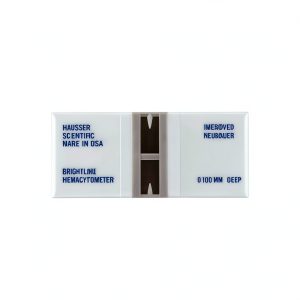
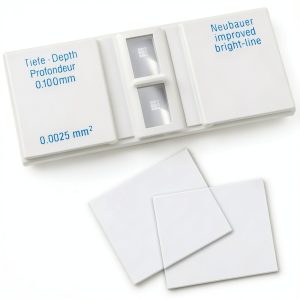
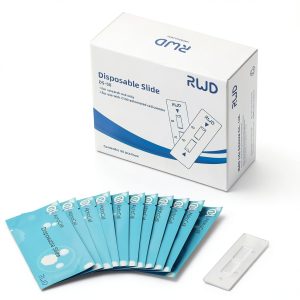
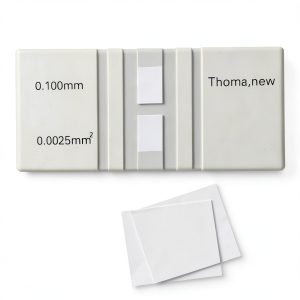
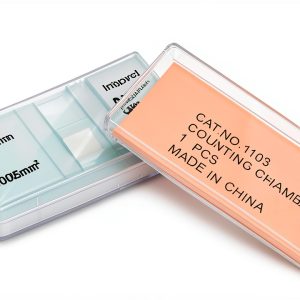
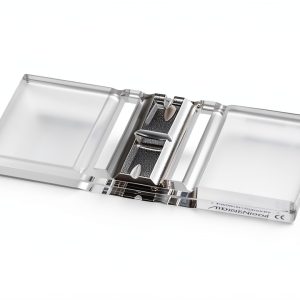 Cell Counting Chamber Neubauer Hemacytometer Marienfeld 10pcs Box
 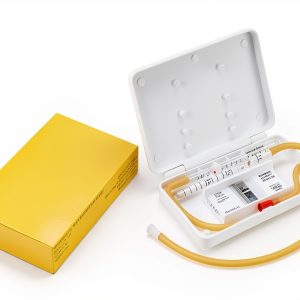 Glass Neubeur Blood Counting Chamber Brightlined Yellow Lab Cellware
 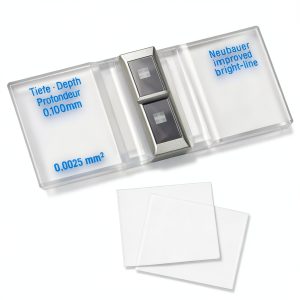 Improved Neubauer Hemocytometer Chamber Creahub Bright Line + 2 Covers
Reviews
There are no reviews yet.