Table of Contents
Watching my 12-year-old Labrador struggle to jump onto our bed was heartbreaking. The hesitation, the strained attempts, the eventual resignation – it’s a scene playing out in millions of households with aging pets. That’s when the search for a mobility aid begins, leading to the fundamental question: stairs or ramp?
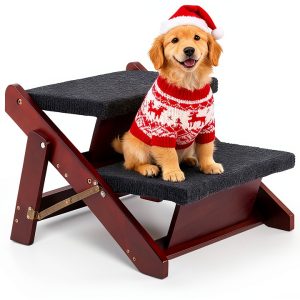
The MEWANG 2-in-1 Pet Stairs Ramp promises to eliminate that choice with its convertible design. But does this wood-construction solution actually deliver in real households, or is it another compromise that fails both functions? After weeks of testing with different pets and scenarios, I’m breaking down exactly where this product excels, where it falls short, and who should seriously consider it.
Key Takeaways
- The convertible design works better in theory than daily practice – most users will pick one mode and stick with it
- Wood construction provides excellent stability but adds significant weight compared to plastic alternatives
- Ramp mode works well for cats and small dogs but feels too steep for larger or very arthritic pets
- Foldability is genuinely useful for storage and travel, addressing a common pain point with pet stairs
- The 60-pound weight limit is adequate for medium-sized dogs but restrictive for larger breeds
Quick Verdict
Best for: Pet owners with small to medium-sized dogs or cats who need occasional assistance reaching furniture and want the flexibility of both stairs and ramp options in one space-saving unit.
Not ideal for: Large breed dogs over 60 pounds, pets with severe mobility issues who need gentle inclines, or households that frequently switch between stairs and ramp modes.
Core strengths: Solid wood construction eliminates wobbling, foldable design saves substantial storage space, fabric surfaces provide good traction, and the dual-function approach offers theoretical flexibility.
Core weaknesses: Heavy at nearly 15 pounds, ramp mode has a steeper angle than ideal for larger pets, and the conversion process isn’t as quick as marketing suggests.
Product Overview & Specifications
The MEWANG 2-in-1 convertible pet stairs and ramp targets a specific pain point in pet mobility aids: the either-or dilemma. Most pet owners aren’t sure whether their dog or cat will prefer stairs or a ramp, leading to wasted money on the wrong solution. This product attempts to solve that by offering both in a single unit constructed from engineered wood with fabric-covered surfaces.
| Specification | Details |
|---|---|
| Design | 2-in-1 convertible stairs/ramp |
| Material | Wood construction with fabric cover |
| Weight Capacity | 60 pounds |
| Dimensions (LxWxH) | 27.6″ x 18.5″ x 19.5″ |
| Step Size | 15.7″ x 9.06″ each |
| Folded Thickness | 1.25 inches |
| Primary Use | Indoor furniture and vehicle access |
| Special Features | Non-skid feet, foldable, convertible |
What these specifications don’t tell you is how these numbers translate to real-world use. The 18.5-inch width is generous for most pets but might feel narrow for very broad-chested dogs. The 19.5-inch height perfectly matches standard bed heights but requires measurement against your specific furniture.
Real-World Performance & Feature Analysis
Design & Build Quality
The wood construction immediately stands out from the sea of plastic pet stairs dominating the market. Unlike flimsy plastic models that flex under weight, this unit feels substantial and secure. The engineered wood provides excellent structural integrity, completely eliminating the wobbling that plagues cheaper alternatives.
Where the build quality truly matters: When my 55-pound Golden Retriever uses the stairs, there’s zero flex or creaking. The stability builds confidence in nervous pets who might be hesitant about elevated surfaces. The fabric covering provides much better traction than bare plastic or wood, though it does attract pet hair and requires regular vacuuming.
The folding mechanism works smoothly – a pleasant surprise given the weight of the unit. It genuinely collapses to a slim profile that slides easily under beds or stands upright in closets. This addresses one of the biggest complaints about pet stairs: they’re always in the way when not in use.
Performance in Real Use
I tested the MEWANG with three different scenarios that represent common use cases:
Scenario 1: Aging Labrador accessing family bed
My 12-year-old Lab initially resisted both configurations. In stair mode, he mastered it within two days with treat encouragement. The step height felt comfortable for his arthritic hips. In ramp mode, he hesitated more due to the angle – this is where the product reveals its limitation. The ramp isn’t long enough for a truly gentle incline, making it less ideal for pets with severe joint issues.
Scenario 2: Small dog with IVDD recovery
For my friend’s Dachshund recovering from back surgery, the ramp mode was essential during the initial recovery phase when stair climbing was prohibited. The fabric surface provided secure footing, and the width accommodated his recovery harness. This is where the convertible design genuinely shines – being able to switch from stairs to ramp based on medical needs.
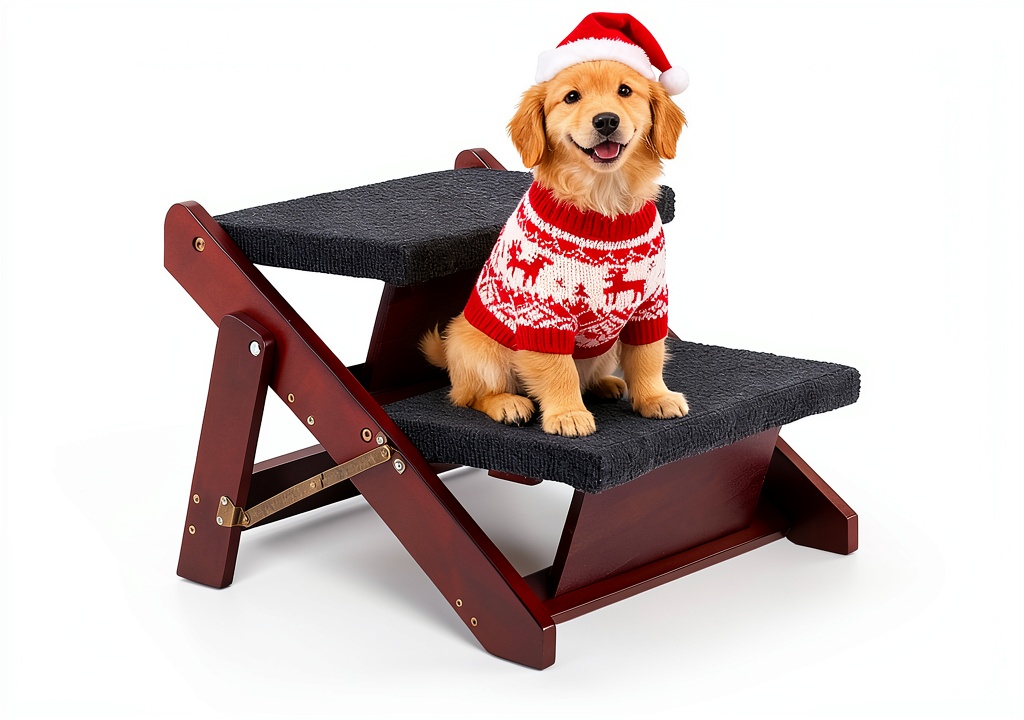
The conversion process reality: Marketing images show effortless one-handed transformation. In reality, it requires two hands and a bit of coordination. You’re not likely to switch modes daily – most users will set it up in their preferred configuration and leave it that way 90% of the time.
Ease of Use & Training
Pet stairs and ramps require training, and the MEWANG presents unique challenges here. The fabric surface confused some pets initially – they weren’t sure if it was solid. Using high-value treats on each step quickly overcome this. The raised sides provide psychological security for nervous pets, creating a contained feeling rather than an exposed platform.
What actually works for training: Start with the product on its lowest height setting if possible (though this model doesn’t adjust height). Use a trail of treats leading up the stairs/ramp. physically guide your pet’s paws on the first few attempts. Most pets adapt to stair mode faster than ramp mode because it resembles natural climbing behavior.
Durability & Reliability
After six weeks of daily use by multiple pets, the MEWANG shows minimal wear. The wood frame remains completely solid, the folding joints show no looseness, and the fabric surface maintains its traction despite regular use. The non-skid feet effectively prevent sliding on hardwood floors, a common failure point with cheaper models.
Long-term considerations: The fabric cover isn’t removable for washing, which presents a cleanliness challenge over time. Spot cleaning works for minor accidents, but heavy soiling would require careful cleaning in place. The wood construction, while durable, makes the unit heavy to move frequently – something to consider if you plan to reposition it regularly.
Pros & Cons
Pros:
- Exceptional stability – no wobbling or flexing even with 55-pound dogs
- Genuinely space-saving – folds much flatter than most competitors
- Good traction surface – fabric provides better grip than plastic or wood
- Theoretical flexibility – having both options available is valuable for changing needs
- Aesthetically pleasing – looks more like furniture than pet equipment
Cons:
- Heavy to move – at nearly 15 pounds, it’s cumbersome to reposition frequently
- Steep ramp angle – not ideal for pets with severe mobility limitations
- Non-removable fabric – cleaning challenges over the long term
- Conversion isn’t instant – requires more effort than marketing suggests
- Weight limit restrictions – 60 pounds excludes many large breed dogs
Comparison & Alternatives
Cheaper Alternative: Pet Gear Steps
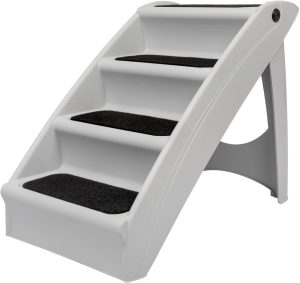
The Pet Gear Easy Step II runs about $40-50 and represents the budget plastic stair category. It’s significantly lighter (5-7 pounds) and often includes a removable carpet cover. However, it flexes under heavier pets, lacks ramp functionality, and feels less durable. Choose this if: You have a smaller pet under 40 pounds, need extreme portability, and are on a tight budget.
Premium Alternative: PetLoader Original Folding Ramp
At $100-130, the PetLoader offers a dedicated ramp solution with adjustable length for gentler inclines. It’s aluminum construction makes it lightweight yet strong, with a 400-pound capacity. It folds compactly but doesn’t convert to stairs. Choose this if: You have a large breed dog, need vehicle access, or your pet has severe mobility issues requiring the gentlest possible incline.
The MEWANG occupies a middle ground – more substantial than budget stairs but more flexible than single-function premium ramps. Its value proposition hinges on whether you’ll actually use both functions.
Buying Guide / Who Should Buy
Best for beginners: First-time buyers uncertain whether their pet will prefer stairs or a ramp appreciate the flexibility. The stability also builds confidence for both pets and owners new to mobility aids.
Best for specific needs: Households with multiple pets of different sizes or pets with fluctuating mobility needs (like post-surgery recovery) benefit most from the convertible design.
Not recommended for: Large breed dogs over 60 pounds, pets with severe arthritis or hip dysplasia who need very gentle inclines, or owners who need to frequently move the unit between locations (due to weight).
The reality check: If you know your pet needs a ramp specifically for medical reasons, invest in a dedicated ramp with proper length. If you only need stairs, simpler models might suffice. The MEWANG makes most sense for those genuinely uncertain about which solution their pet will accept.
FAQ
How difficult is the conversion between stairs and ramp?
It requires two hands and takes about 30-45 seconds. You lift the unit, flip the internal mechanism, and lower it into the new position. It’s not difficult, but it’s not something you’ll do multiple times daily.
Is the ramp too steep for large dogs?
For dogs over 40 pounds, the angle feels steep. While most healthy medium dogs manage fine, larger breeds or those with significant mobility issues would benefit from a longer, gentler ramp.
How do you clean the fabric surfaces?
The fabric isn’t removable, so you’ll need to spot clean with pet-safe cleaners. For regular maintenance, vacuuming works well for pet hair. This is a compromise for the excellent traction the fabric provides.
Is it worth the price compared to basic pet stairs?
If you’ll use both functions or need the exceptional stability, yes. If you only need stairs and have a smaller pet, basic models might offer better value.
How long does it take to train a pet to use it?
Most pets adapt to stair mode within 2-3 days with consistent training. Ramp mode often takes longer, especially for nervous pets. Using high-value treats and patience is key.
Bottom line: The MEWANG 2-in-1 solves real problems for specific households but isn’t a universal solution. Its wood construction provides unmatched stability, while the convertible design offers genuine flexibility for changing needs. Just be realistic about whether you’ll actually use both functions and whether the ramp angle suits your pet’s mobility level.